


Room occupancy
Room occupancy data shows which meeting rooms, huddle spaces and phone booths are really used, and which are booked but empty. Live and over time, collected anonymously with no cameras and no cabling.
500,000+
sensors deployed
worldwide
50+
countries with active deployments
200M
anonymous data points every day

TRUSTED BY THE WORLD’S LARGEST ORGANIZATIONS





Why measure meeting room occupancy

Meeting room utilization: the questions room occupancy data settles
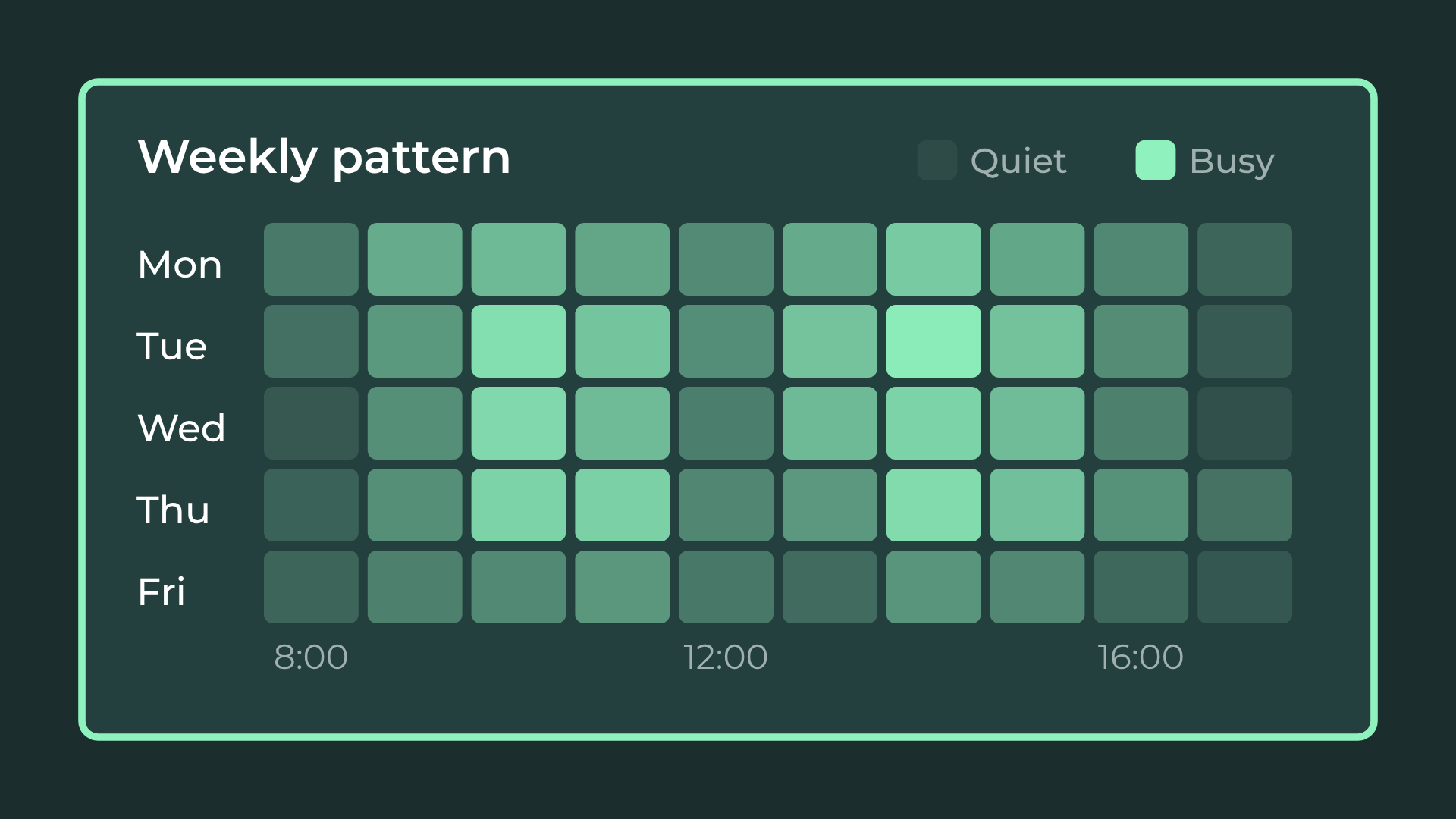
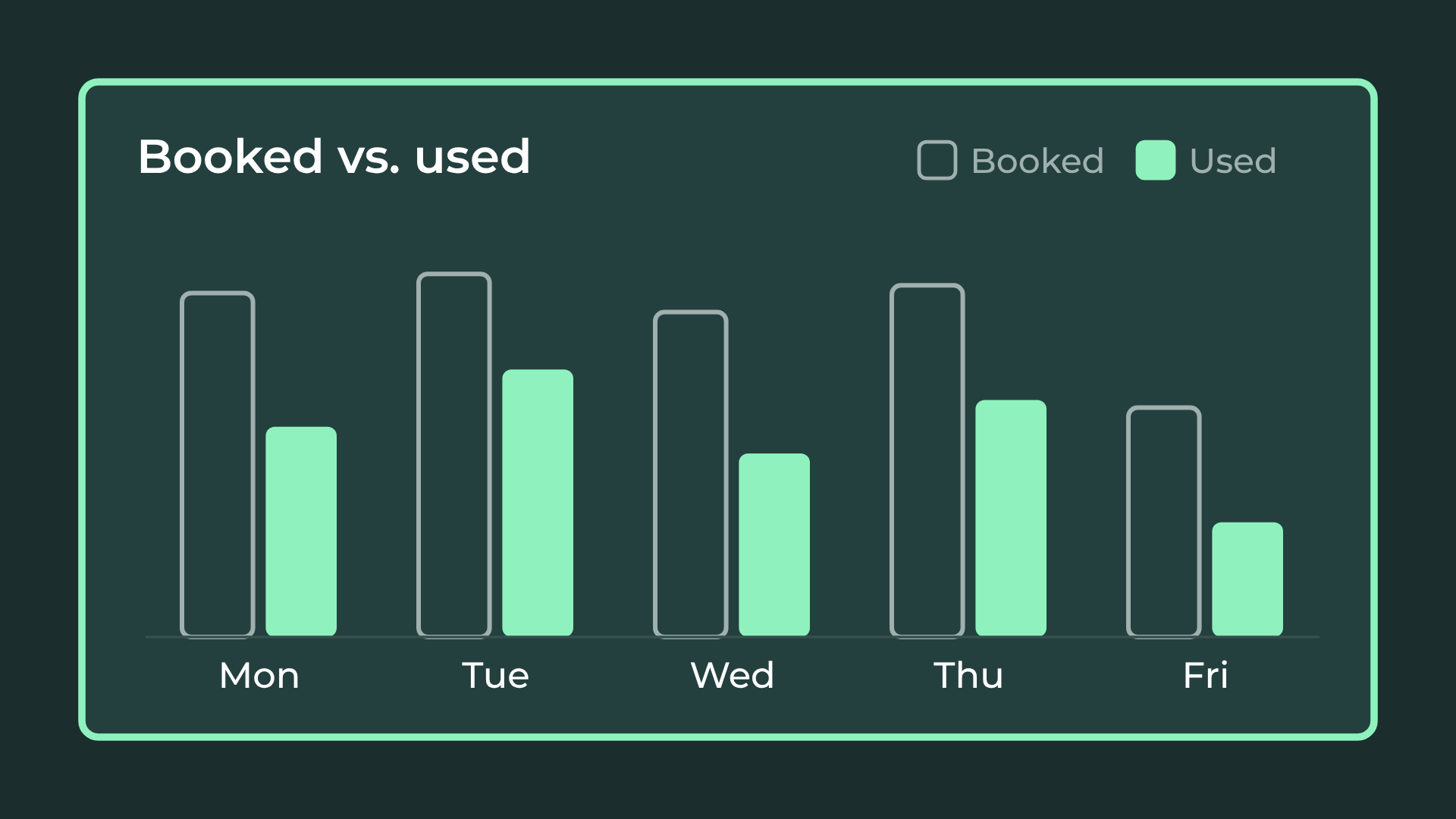
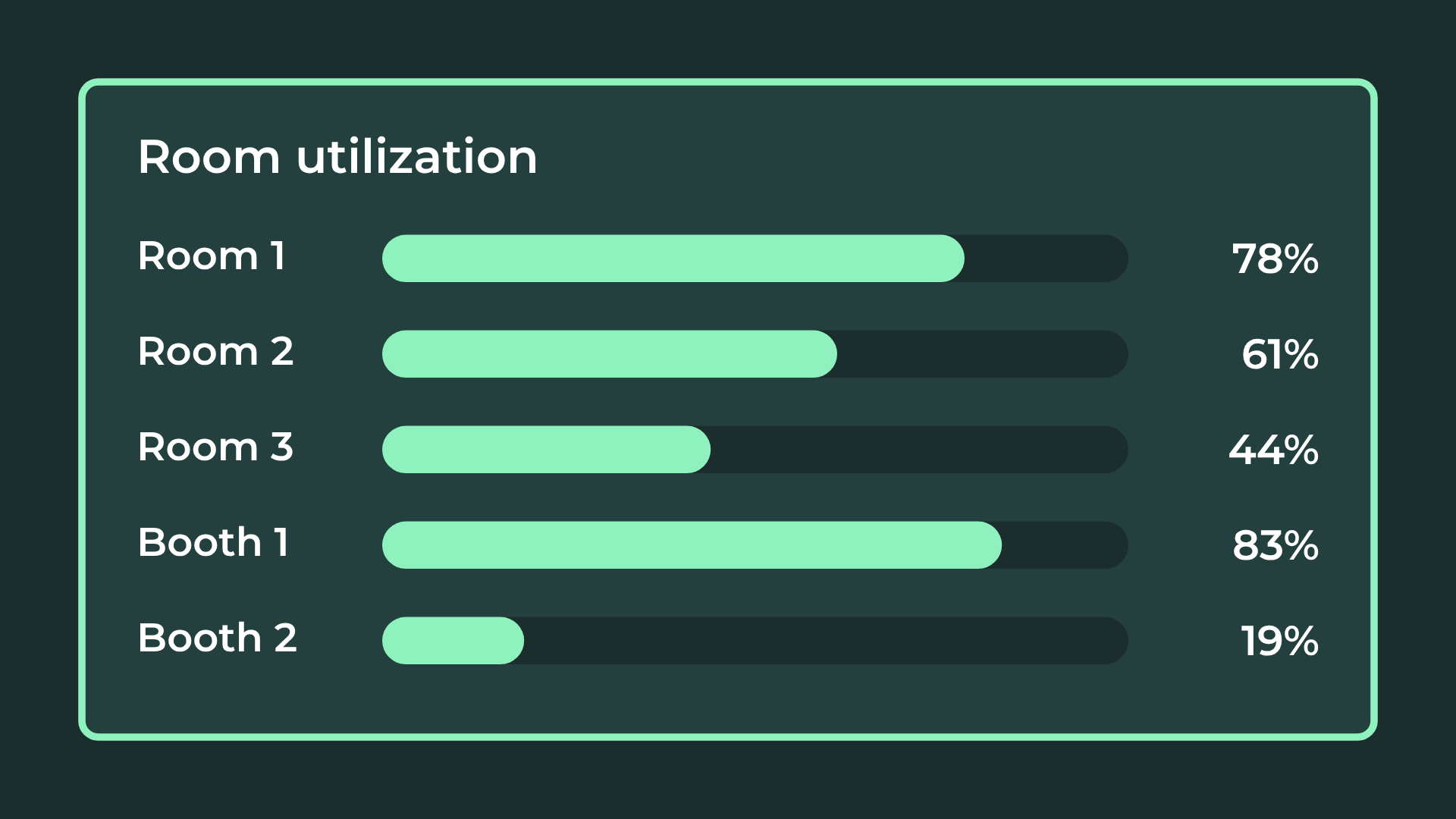
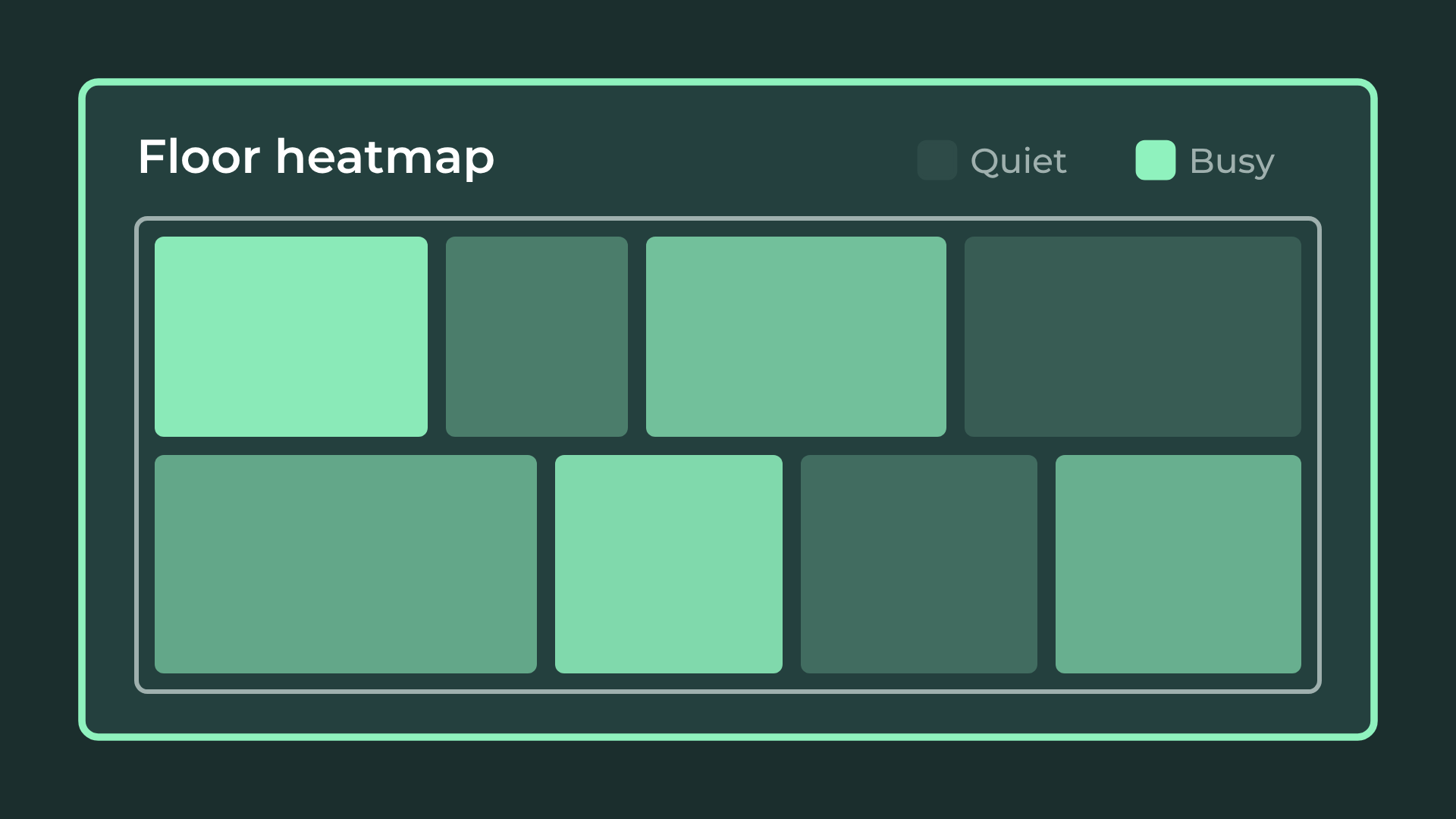
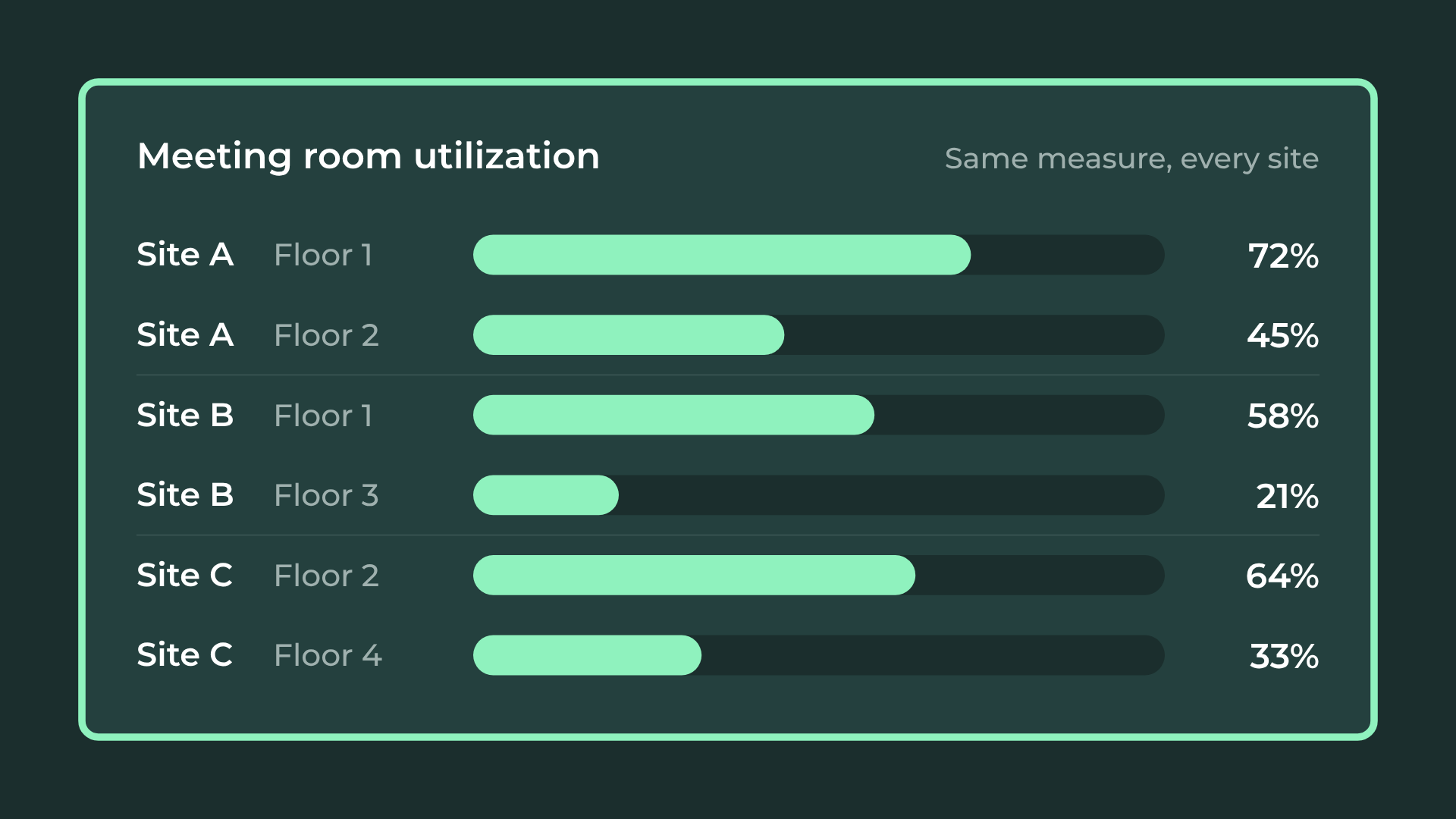
Examples of room occupancy reports
You decide what to follow. These are some of the views room occupancy data makes possible.
How room occupancy is measured


Interested in the technical details? See the occupancy sensor specifications →
CUSTOMER story · IF
If: 40% less office space, built around hybrid work
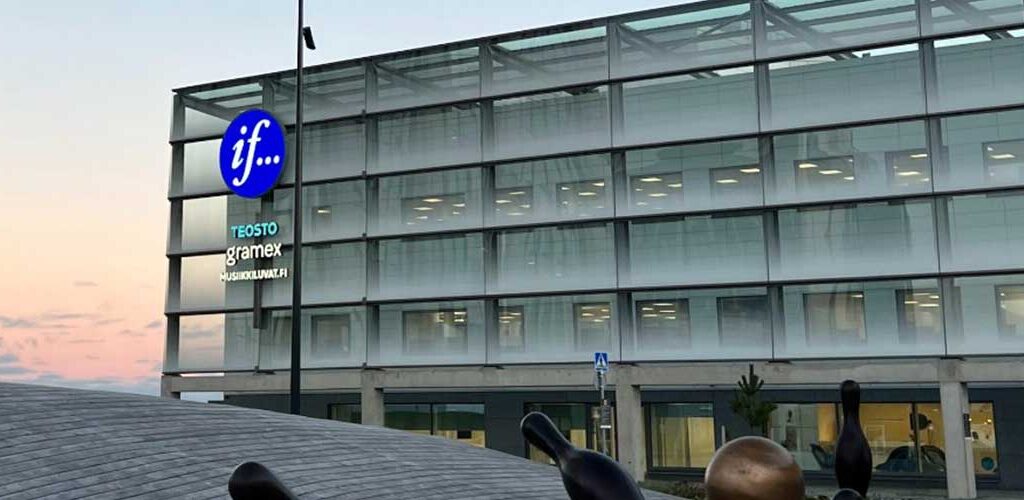
If, the Nordic insurer, used room and desk data to redesign its offices for hybrid work. In Espoo alone, it scaled down from 15,000 m² to around 9,000 m² and cut desks from 650 to around 400, while creating more space for collaboration. Continuous space usage data now guides maintenance and has reduced facility costs.
9,000 m²
office space, down from 15,000 m²
400
desks, down from 650
Lower
facility costs, guided by usage data

Start with the rooms everyone argues about
Tell us about your meeting rooms and what you want to find out. We’ll talk it through with you and suggest where to start.
Room occupancy FAQ
Room occupancy analytics measures whether meeting rooms, huddle spaces and phone booths are in use, when and for how long. It lets you compare real use with bookings and plan the right number and size of rooms.
Haltian’s sensor detects presence through body heat. In large or wide rooms we plan coverage together and add sensors where needed, so the data reflects the whole room, not one corner.
Room occupancy shows whether a room is in use. To know how many people are inside, add Haltian people counting, which counts people anonymously.
Yes. Comparing measured presence with reservations is how no-shows and ghost bookings become visible.
Haltian delivers room occupancy data through open APIs into BI tools, data lakes and workplace apps, including partner platforms such as Cisco Spaces and Microsoft Places.
No. Haltian’s occupancy sensors are battery-powered and wireless. Only the gateway needs a power socket.
A few minutes per room. The sensors stick in place, and once the gateway is plugged in, occupancy data starts flowing the same day.
No. Haltian’s sensors detect body heat with passive infrared and record only whether a room is in use. There are no cameras, microphones, biometrics or individual tracking, and all data is hosted in the EU.
Sensors and gateways are a one-time investment, and one gateway serves many rooms, so a typical floor needs only a few. After that, a SaaS subscription with built-in reports keeps your costs predictable, and it scales as you add rooms. Send us a floor plan, and we will price your own floor.
Haltian hosts all room occupancy data in the EU, and the data belongs to you.